
In the absence of a definition of limited infilling within the Green Belt, it comes down to a matter of judgment as to whether the proposed development meets this test. This test can be split into three ‘sub-tests’ that need to be met for a development to be considered to accord, as follows:
- Is the site within the village?
- Does the development constitute infilling?
- Is this infilling limited?
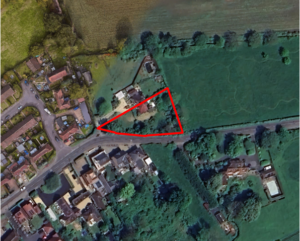
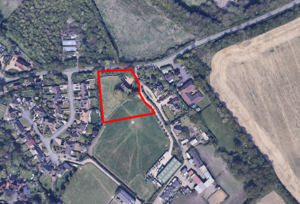
Two projects that Solve Planning have been involved in provide examples of how this judgment can successfully be applied; Willow Grange, Fifield Road (Royal Borough of Windsor and Maidenhead – ref.no. 21/02817 and appeal reference APP/T0355/W/22/3304594) and Heath Barn Cottages, Send Marsh Road (Guildford Borough Council – ref. no. 24/P/00292).
Is the site within the village?
It has long been established through case law* that for the purposes of this Green Belt policy test, whether a site is within a designated village settlement is not determinative as to whether it is within the village. Other considerations are equally, if not more, important such as the proximity of the site to the settlement boundary, and the extent and nature of built form around it. In the case of both Willow Grange and Heath Barn Cottages the site lies adjacent to but outside of the settlement of the village as designated in the local plan. However, Solve Planning successfully argued in each case that the proximity of the site to the settlement boundary and the location, density and extent of development surrounding it meant that the site could be considered to be within the village envelope.
Does the site constitute infilling?
Infilling is often considered to be the development of a small gap within a continuous linear frontage, as was the case with Willow Grange. However, the Heath Barn Cottages site was different as the proposed dwelling formed the last property along Send Marsh Road before open countryside. Solve Planning successfully made the case that built form immediately to the north of the site and on the opposite side of Send Marsh Road to the south meant that the development could still be considered infilling despite open countryside lying beyond the site’s eastern boundary. This demonstrates that a site does not always have to sit within a continuous linear frontage to be considered infilling and that the particular site characteristics are key to the judgment of whether this ‘sub-test’ is satisfied.
Does the proposal comprise limited infilling?
In the case of Heath Barn Cottages, the proposal clearly comprised limited infilling as it was for a single dwelling on a relatively small plot. For Willow Grange, the argument was more nuanced as the proposal was for the provision of up to six dwellings and the gap in built form was 55m. The Council considered the extent of the gap and the scale of the development meant that it did not comprise limited infilling. Solve Planning contended that the proposal was limited when one fully considered the context of the site and the nature of the proposal within that context. This approach was supported by an inspector at appeal.
Conclusion
The above examples show that there are no hard and fast rules when it comes to considering what comprises limited infilling within a village in the Green Belt. A site’s location outside of the defined village settlement does not automatically mean that it is not within the village for this purpose. What comprises limited infilling is also often up for debate. The key lesson to be learnt from both the Willow Grange and Heath Barn Cottages cases are that site context is key to making the case that a development meets the test.
*Julian Wood v The Secretary of State for Communities and Local Government, Gravesham Borough Council EWCA Civ 195 – 9 February 2015